
Giovanna’s Return to Her Paternal Family
The Lying Life of AdultsThis thread traces how Giovanna Trada moves from imagining her father’s relatives as a threatening, distant world to finding affection and a separate sense of belonging among them.
increasing Bearing strength in each event
 decreasing
Bearing strength in each eventdecreasingA Nameless Family World
A Family Below the City
A distant branch
Giovanna Trada knows her mother’s relatives in Museo as affectionate figures, but her father Andrea Trada’s family appears only at occasional weddings and funerals. Visits are rare and tense, and the adults seem to erase them from family life as soon as they return home.
Geography as estrangement
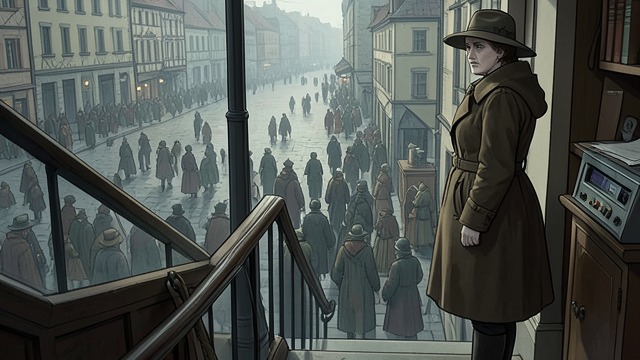
In Giovanna’s imagination, her father’s relatives live somewhere far below the ordered neighborhoods she knows. The journey down through Naples becomes a boundary between her parents’ cultivated world and an unknown, possibly dangerous one.
Her parents’ nervous preparations deepen the mystery. Their warnings about Vittoria make the family seem less like a network of ordinary relatives than a forbidden territory whose rules Giovanna has not been allowed to learn.
Meeting the Blood Relatives

The Paternal Branch Opens
An unexpected itinerary
Vittoria Trada takes Giovanna Trada to visit Uncle Nicola, Aunt Anna, and Aunt Rosetta without advance preparation. She describes the journey as meeting Giovanna’s “blood,” presenting kinship as a claim her brother Andrea Trada has kept from his daughter.
A welcoming reception
The homes are small and plain, unlike the spaces Giovanna associates with her parents and their friends. Yet the relatives greet her warmly, call her Giannina, and make room for her in their family conversations without demanding that she defend her father.
Their ordinary hospitality gives Giovanna a kind of welcome she has missed. For a while, the family name Vittoria has introduced does not make her feel ugly or threatened; it gives her a place among people who are glad she came.
A Place at Margherita’s Table
Kinship Around Enzo
The household’s shared history
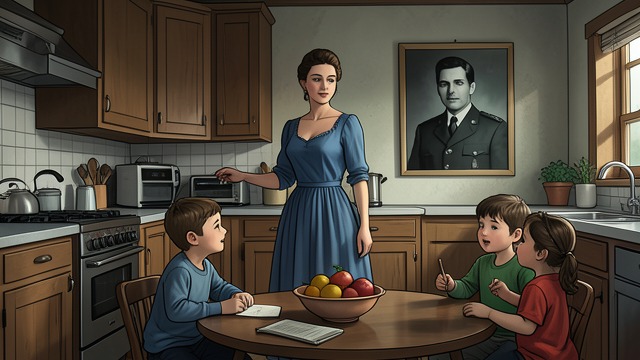
Vittoria takes Giovanna to Margherita’s home, where Enzo’s children—Tonino, Giuliana, and Corrado—receive her alongside their mother. A large photograph of Enzo in uniform presides over the kitchen, making his absence a visible part of the household.
A complicated welcome
Giovanna notices that the children love Margherita but also defer to Vittoria, whose influence reaches into the family’s decisions. She sees affection and tension operating together: Vittoria is not merely an outsider to Enzo’s household, yet her place there is not uncomplicated.
For Giovanna, the visit extends the meaning of paternal kin beyond blood relations. She is drawn to the children and to Margherita, and begins to imagine a family life built from shared memories and care rather than from the polished order of her parents’ home.
The Name Giannina

A Different Family Self
Affection through a name
The relatives call Giovanna “Giannina,” the name Vittoria uses and her parents do not. In their company, Giovanna feels more relaxed and funny than she does in her familiar life on the Vomero, as though a new version of herself can emerge through their welcome.
Belonging with conditions
That ease is real, but it is tied to Vittoria’s campaign against Andrea. The relatives do not ask Giovanna to pass messages to her father, yet Vittoria repeatedly interprets their warmth as evidence that Andrea has deprived his daughter of a wider family.
Giovanna therefore receives an alternative sense of belonging at the cost of growing secrecy. Her attachment to the relatives becomes part of a double life: she loves their welcome while concealing how deeply she remains attached to her parents.
Family Ties Reopened

Estrangement Softens
A practical reconnection
When Costanza needs ongoing care, Andrea and Vittoria agree to consider Vittoria for a new job. Andrea tells Giovanna that he and his sister have not made peace, but that time has passed and they are older; their daughter has, he believes, acted as a bridge between them.
An incomplete reunion
The exchange marks a change in conduct rather than a resolution of the siblings’ history. Vittoria and Andrea remain shaped by old injuries, and their new contact does not erase the hostility that formed Giovanna’s first understanding of the paternal family.
Still, the family is no longer wholly sealed off from itself. Giovanna’s visits have brought the separated branches into practical contact, even as she learns that belonging to both sides does not give her the power to settle their disputes.
Before Giovanna’s first visit to Vittoria
After Giovanna begins visiting Vittoria
During Giovanna’s visits to the family in the fall
After Giovanna has met her paternal relatives
After Andrea and Nella’s separation begins
